• Home
  • About
  • News
  • Portfolio
  • Press
  • Articles
  • Design Ideas
  • Contact
  • Lifestyle
  • Services
  • Project X

Y2DC©

~ DesignConsultants: LDN | HK | NYC | LA

Y2DC©

Author Archives: Y2DC©

The Bond Condominium | LXRY Magazine

22 Sunday Apr 2012

Posted by Y2DC© in News

≈ Leave a comment

Tags

architecture, Canada, interior design, interior design consultants, Lifetime Developments, luxury development, The Bond Condominium, The Bond Condos, Toronto Property Developments, Toronto Real Estate

The Bond Condominium

Location: 290 Adelaide St W Toronto, ON

Price: From the Mid $200,000′s

The Bond Condominium is a new development by Lifetime Developments located in downtown Toronto, Ontario.  Lifetime Developments have been continue building up into the Toronto, raising the skyline with beautiful designs and great uses of architecture.

The development is already in pre-construction and is on target to be completed in 2015, the project has 369 units in total and is full of nice amenities to compliment it’s already convenient downtown location.

The Bond is a direct connection to the city’s downtown core providing quick access to the TTC and other major landmarks around Toronto.

Some amenities include, a lounge for you and your friends to gab over a nice drink, with the added touch of a fireplace. There is also a Games Room, Terrace and BBQ (perfect for summer in the city), Yoga Studio, Sun Deck, and for those golfing fans out there, a golf simulation room.

The suites of The Bond include floor-to-ceiling windows to expand and capture as much of Toronto as you can, smooth finishings with ceilings, frames, and spacious balconies to enjoy your piece of the sky. The kitchen includes designs from Tomas Pearce IDC and can be fitted with either quartz or natural stone countertops.

Some of the more technical features include, individual thermostat, pre-wired access to cable and high-speed internet, and even remote access to the private garage underneath.

The Bond is a connection to the downtown core, it’s a close to fashion, culture and most important close to the downtown area.

Photo Source: BuzzBuzzHome | The Bond Condos

The Strand Craft 122 & SuperCar

22 Sunday Apr 2012

Posted by Y2DC© in Lifestyle

≈ Leave a comment

Tags

Bang and Olufsen, Bang Olufsen, interior design consultants, luxurious interior design, Luxury Toys, Strand Craft, Strand Supercar, Super Yachts, The Strand Craft 122

Price: $24 – 29 Million.

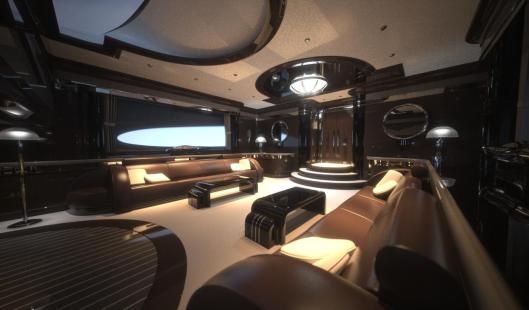
Strand Craft and Gray Design team up to create this superyacht, the Strand Craft 122. With 14,000 HP and a cruising speed of 55 knots, this luxury boat also comes with the Strand Supercar complete with two 880 HP Twin Turbo V12 with a top speed 375 km/h.

The Strand Craft 122 has it’s own garage for the Strand Supercar and with a 38 metre length, it definitely has room for it.

The Strand Craft 122 has a luxurious interior design while four double guest rooms, a saloon area and completed with ensuites.

Each room includes a 52″ LED TV hooked up to a Bang & Olufsen sound system.

How is this for exclusive? Only 6 will be made

Saint Andrea | Paros

22 Sunday Apr 2012

Posted by Y2DC© in Lifestyle

≈ Leave a comment

Tags

byzantine monastery, cosmopolitan town, Cycladicarchitecture, French finesse, great architecture, greek islands, luxury hotels, Naousa, naoussa bay, paros, saint andrea, travel, white rocks

Image

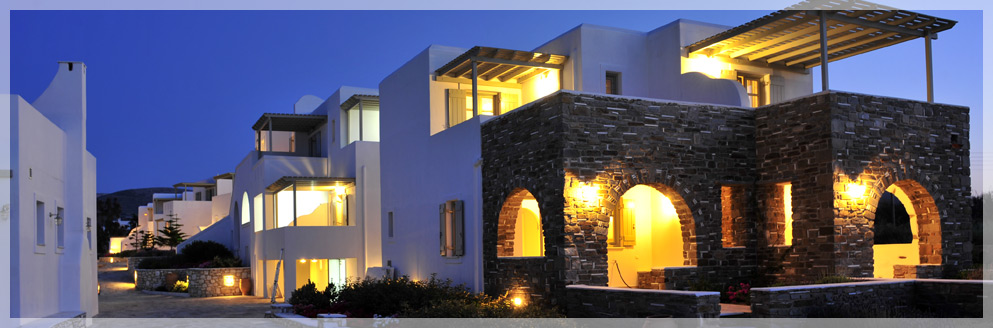
On the way to Kolymbithres, Paros – one of the island’s most beautiful beaches – right beside the sea and with a view of the Naoussa Bay, lies Saint Andrea Resort.

The owners named the hotel after the byzantine monastery of Saint Andrea, which belongs to the family since the 16th century. The hotel complex, with its Cycladicarchitecture and the French finesse, encompasses the luxury of another era and combines the modern trends of today with the aristocratic traditions of yesterday.

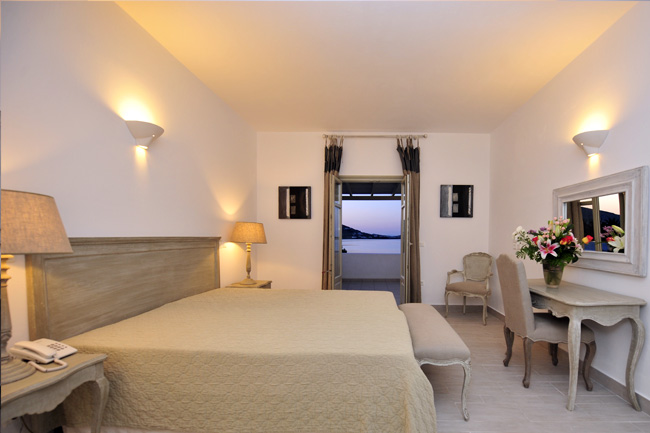
Saint Andrea Resort is built on the north side of the island, just 1,5 km from the cosmopolitan town of Naousa, with a view of the white rocks of the region, sculpted by nature herself. It consists of 56 rooms and suites, is superbly structured, and offerstop-quality services. Our knowledge and experience, the great architecture, the delicate and refined taste, the idyllic location, the luxury, our will to deliver impeccable results, our love of hospitality, and the Aegean’s deep blue palette can guarantee you anunforgettable summer.

Image

Credit Suisse’s Canary Wharf HQ sold to Qatar Investment Authority

22 Sunday Apr 2012

Posted by Y2DC© in News

≈ Leave a comment

Tags

cabot square, Canary Wharf, Gaw Capital Partners, goldman sachs, london stock exchange, Nathan Kirsh, Qatar Investment Authority, real-estate

Qatar’s sovereign wealth fund has agreed to buy Credit Suisse’s Canary Wharf headquarters as it expands further into London commercial property.

The Qatar Investment Authority (QIA) is understood to have placed 1 Cabot Square under offer for around £330m in a sale-and-leaseback deal with the Swiss bank.

QIA is already Credit Suisse’s second biggest shareholder with a stake of 6pc and owns 28pc of Songbird, the majority owner of Canary Wharf Group.

The deal for the 540,000 sq ft building is the latest example of overseas investors targeting London as a safe haven with the eurozone riddled with economic uncertainty.

A Hong Kong-based investor, Gaw Capital Partners, is also thought to be exploring a deal for Goldman Sachs’ London offices at Peterborough Court.

In December, South African investor Nathan Kirsh bought Tower 42 in the City for £282.5m, while the FTSE 100 property company Hammerson sold the former site of the London Stock Exchange for £176m to Kuwait’s sovereign wealth fund.

Y2DC Open China Office | Hong Kong

22 Sunday Apr 2012

Posted by Y2DC© in News

≈ Leave a comment

Tags

chinese property investment, chinese property market, hong kong luxury developments, hong kong property investment, interior design, interior design consultants, investing in central london property market, investing in china, investing in hong kong property, investing in uk property, london interior design, luxury development, redevelopment

Y2DC’s forward thinking has seen it recently opening their first Asia office in Hong Kong. As a progressive and dynamic design firm with offices in the UK, USA and China. We pride ourselves on being able to provide professional, comprehensive services to our clients all over the world, whether they be corporations or private individuals.

Whether you are a private individual or large corporation, our established and experienced team with its proven track record, are awaiting to develop a strong and personal relationship with you. Whether you are seeking to acquiring a home or expanding your property portfolio, we will work with you every step of the way.

We are looking to expand and invest heavily into the China market allowing us to achieve a strong presence as a premier interior design consultancy, creating and expanding business opportunities between China, UK and USA.

Aiming to build a strong foundation for more growth in Asia that ensures investments in China. We are looking to forge strategic partnerships at national and local levels for the benefit to all new and existing clients.

For further information and any enquiries please contact us

Go back

Your message has been sent

Warning
Warning
Warning

Warning.

17-22 Trevor Square, Knightsbridge, London

22 Sunday Apr 2012

Posted by Y2DC© in News

≈ Leave a comment

Tags

harrods, interior design, interior design companies, interior design consultants, knightsbridge luxury developments, knightsbridge property, london interior design, trevor square

Y2DC©

Trevor Square’s commanding and historic architecture, once part of Harrods, reflects the prestige of a Knightsbridge address, a renowned location within easy reach of Hyde Park, Mayfair and Chelsea.

Renovated to the highest standard and the most modern of specifications this development represents a unique opportunity to live in one of London’s most notable residential areas.

View original post

Villa Amanzi in Phuket Treats With Luxury, Awesome Scenery & Sea Views

22 Sunday Apr 2012

Posted by Y2DC© in News

≈ Leave a comment

Tags

architecture, hotel designers, interior design, interior design companies, interior design consultants, luxury development, luxury villas, phuket luxury villas, private spa, travel


DREAM HOUSES / APRIL 21, 2012

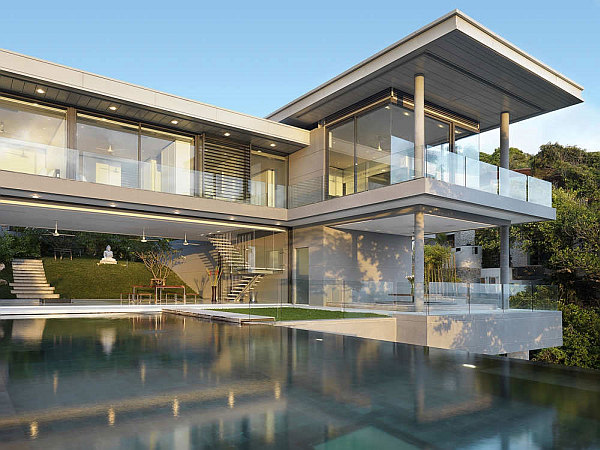
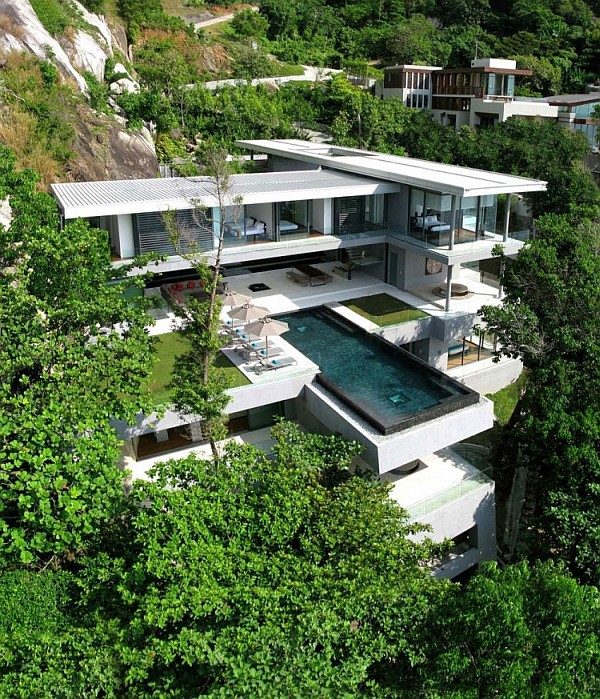
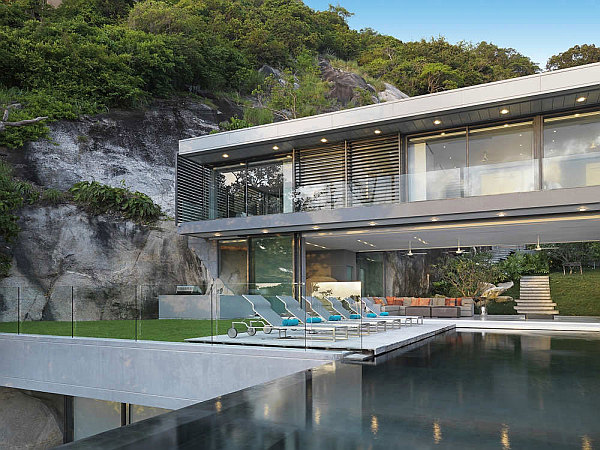
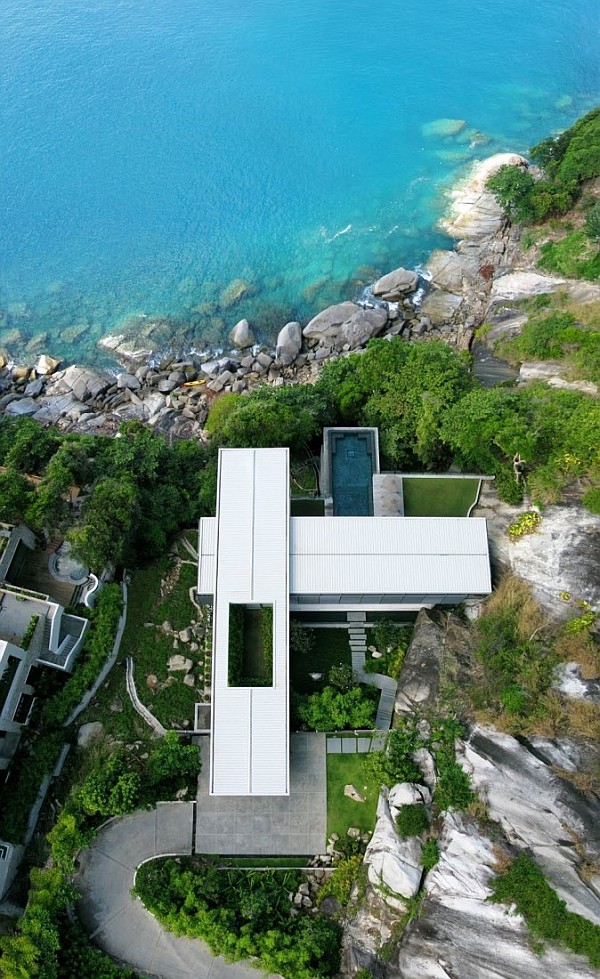
Situated on a natural terrain in Kamala Beach on the western coast of Phuket in Thailand, Villa Amanzi features all the facilities you would see in a contemporary luxury villa.

Meant as a luxury vacation rental spot, in the first place, Villa Amanzi is perfect for a typical family of seven/eight, or for a bunch of friends coming to the country seeking fun. It has six lovely bedrooms with contemporary bathrooms. The forte for this three level edifice is a 15 meter protruded infinity pool. Add to the fact that the Andaman Sea and the beautiful scenery put together an amazing, visually enticing spectacle, and you’ll thank for all those stunning glassy walls that fit so perfectly.

Available for rent throughout the year, if you’re heading for Kamala Beach and you’d like a luxury stay then know that a stay at Villa Amanzi would cost $2,000 to $4,500 per day, depending on the season. Not the cheapest you could find, but so dreamy.

At Coyote House, every day is an Earth Day | LA at Home [LA Times]

22 Sunday Apr 2012

Posted by Y2DC© in News

≈ Leave a comment

Tags

architecture, Blackbird Architects, Environmental Design, green architecture, green design in LA, green materials, interior design, interior design consultants, LEED platinum homes, los angeles architecture, los angeles interior design

Oh, how far we’ve come from Earth Days past — when the phrase “green home” conjured images of straw-bale structures, when solar panels seemed like such an earnest novelty, when “LEED certified” hadn’t yet crept into public consciousness.

With Earth Day 2012 almost upon us, nearly 60,000 homes in the United States are in the process of being certified in the U.S. Green Building Council’s Leadership in Education and Environmental Design program, according to Nate Kredich, the organization’s vice president of residential market development. Need more convincing proof of just how far we’ve come? Take a peek at the new home of architect Ken Radtkey and landscape architect Susan Van Atta.

The husband and wife’s three-bedroom house nestled into a Montecito hillside is dubbed the Coyote House, partly after the name of the couple’s street, partly after the howling critters in the area. Beyond its abundance of energy- and water-saving features, however, the house is notable for its utter normality: On the most basic level, it is simply a comfortable and beautiful family home.

Coyote House veranda“Designing sustainably was a given for us,” says Radtkey, founder of Blackbird Architects, a Santa Barbara firm with an emphasis on sustainable design. “But the most important goal was to make a great home.”

To that end, the house starts with a modern take on the veranda, right. A covered room overlooking the front garden has a sliding screen and front and back sets of glass pocket doors that can open to the outdoors or seal it off in various ways, depending on the season and weather.

A dozen highly flammable eucalyptus trees — by coincidence, cut down just months before the November 2008 Tea fire that swept through the region — were used to build the front door, kitchen table, bookcases, stairs and banister. Other materials used for interior appointments were sustainable too: Cabinets are bamboo, the floors are cork or salvaged stone, most of the walls unpainted plaster.

Coyote House living room
But the house does go beyond common green materials and approaches, the couple says, “fully engaging the site to reap an experiential quality of life.” (That’s Van Atta and Radtkey in the living area.)On the “mirador” above a second-floor bedroom, for example, solar panels configured as a pergola not only generate nearly all of the house’s electricity but also create a shady viewing deck. “We like to go up and sit on our porch swing and have drinks there,” Radtkey says.Coyote House roofThe mirador looks out onto the second floor’s green roof, right, which Van Atta planted with sedum and dudleya. “Instead of looking out across a hot roof, we have a lovely green area to entertain friends,” she says. Combined with rooms that are partially bermed into the hillside, the green roof further merges the house into the landscape.The main green roof is arced, so rainwater gently flows down to a lower rooftop meadow atop the garage, and from there to a gutter feeding a sophisticated series of cisterns. About 10,000 gallons of rainwater can be stored to irrigate the terraced garden, vegetable beds, fruit trees and a large lawn where the couple’s two sons play.The water-wise lawn consists of native grass seeded into a 14-inch-deep pan of sand. When it needs watering, irrigation flows across the surface of the underground pan, reaching roots through a wicking effect and minimizing evaporation.Coyote House day
“Honestly, a lawn at a LEED platinum home may not make sense, but there’s a quality-of-life issue that you have to consider,” Radtkey says. “Our sons love volleyball and badminton, and we wanted a lawn for them to play on.”Coyote House chickensAlso on the playful side: five chickens in the side yard next to the kitchen. The cackling hens, pictured at right with the couple’s son, Kellen, have become family pets that eat leftovers, supply rich manure for the compost pile and produce fresh eggs daily. Near the bottom of the driveway, a new beehive will produce fresh honey for toast as well as pollinators for the orchard.“It’s a pleasure to go out and pick the eggs, then make omelets for breakfast,” Van Atta says. “Right now we get about one-fifth of our food from the new garden and chickens, but we expect much more as the garden and orchard mature.”

Much of what the family has done can be seen as simultaneously looking forward and back, Radtkey says.

“A lot of the old-fashioned elements are common sense and have been around forever, like green roofs, proper orientation of the house for shade, using trees from the site to build furnishings and interior woodwork — not to mention having your own vegetables, fruit, fresh eggs and honey,” he says. “We take advantage of the latest thinking and newest materials in order to realize values people have had forever.”

— Barbara Thornburg

Landmark Houses: John Lautner’s Chemosphere

21 Saturday Apr 2012

Posted by Y2DC© in Uncategorized

≈ Leave a comment

Tags

architecture, celebrity home, Chemosphere, la homes, LA Interior design, los angeles architecture, los angeles interior design

By Scott Timberg, Los Angeles Times Staff Writer

When Benedikt Taschen, a globe-trotting publisher of stylish art books, and his then-wife first laid eyes on Chemosphere in 1997, the iconic Los Angeles house had seen better days.

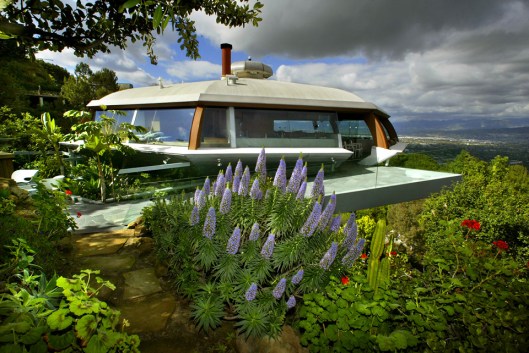
The sleek, octagonal design, arguably the boldest work by the singular architect John Lautner, is considered a masterpiece of California Modernism and is beloved by cultists of midcentury design.

But the Taschens saw dirty, disco-era, wall-to-wall carpet on much of its 2,200 square feet, an old aluminum door, smudged windows and seven layers of paint on what was originally a gently austere, exposed brick wall.

Still, “it was love at first sight,” says the laconic German, wearing a red Muhammad Ali bathrobe as he shows off the place on a hazy morning. The backlist of Taschen’s company — from homoerotic nudes to the original Lutheran Bible — includes books on Modernist homes, the architectural photographs of Julius Shulman, the works of Richard Neutra and the Case Study houses. Some of the titles, along with dozens of art magazines, are scattered around the house and its unobtrusive furniture.

Today, the place is serene and airy, with a simple, light-wood openness that suggests midcentury Scandinavian crossed with a ski chalet, and views that are pure Southern California.

“I bought it right away — as fast as possible,” says Taschen.

Frank Escher, who was brought in as restoration architect, vividly remembers the place’s condition.

“I have to give Benedikt credit for seeing past the disrepair and sad state the house had fallen into,” he says. “It looked like a rundown motel. It had been rented out for 10 to 12 years; it was like the ultimate party house.”

In fact, during much of that decade, the place had been on the market. “It was for sale for so long,” says Taschen, “that it was even in a ‘Simpsons’ episode: a house with a for-sale sign.”

“There was no market for that house,” says Julie Jones, the Realtor in the sale, who had watched the place languish after she listed the house. “Everybody loved Spanish, and then shabby chic came in.” Midcentury houses “would sit and sit and sit — you couldn’t give ’em away. People would want to see the view, and that was about it.”

The fate seemed unjust for a structure the Encyclopedia Britannica had judged “the most modern home built in the world,” and which had appeared in Brian De Palma’s “Body Double.” It’s hard not to see the house, which sits on a 29-foot-high, 5-foot-wide concrete column over a long-considered-unbuildable Hollywood Hills site, as a hovering flying saucer or a prototype for the 23rd century architecture of “The Jetsons.”

But the 1960 house is very much a work of its time and place.

Alan Hess, an architectural historian and author of “The Architecture of John Lautner,” considers Chemosphere as perfect an expression of Southland culture as Greene & Greene’s Gamble House, Charles and Ray Eames’ Case Study house and the finest work of Neutra and R.M. Schindler.

Chemosphere was characteristically Los Angeles of that time because “it didn’t have to look like a house,” says Hess. “It was an architecture newly defined. It could take on its own brand-new shape. It displays the optimism of its time: that technology can be used to solve any problem, just as Century City and Googie’s,” the Lautner-designed Sunset Boulevard coffee shop, did. “The West would not be possible without technology: Water, electricity, everything that it took to overcome dryness and distance was dependent in some form on technology.”

Hess finds the house fascinating partly because it was built for a couple and their four children. “And yet whenever that house is used in the movies, it’s always a decadent bachelor pad,” Hess says. “You have the reality of Southern California life, and the image of Southern California life, summed up in one house.”

It’s not the only contradiction the place contains.

“From the outside it looks like a spaceship which you cannot enter,” Angelika Taschen says from Berlin, where she now lives. (The couple were finalizing a divorce at the time of this article’s publication.) “But if you go inside, it feels very cozy … very Zen and calming. Maybe because you are floating above the city, above reality in the sky. You feel disconnected from the planet and completely free and happy.”

The house is the product of a fortuitous union of architect, client, time and place. Leonard Malin was a young aerospace engineer in late-1950s L.A. whose father-in-law had just given him a plot north of Mulholland Drive, near Laurel Canyon. The land was leafy and overgrown, with extravagant views of the San Fernando Valley.

“My philosophy at the time was, most people work their whole lives to build their dream house,” Malin says from Arizona, where he’s constructing a new home. “Why not build it now, and pay for it for the rest of my life?” This was a time, during L.A.’s postwar expansion, when a middle-class client could build in the Hollywood Hills on a modest budget: Malin had $30,000 to spare.

The only catch: At roughly 45 degrees, the slope was all but unbuildable. The plot may have remained empty had Malin not approached Lautner, whose work he knew from a nearby house. Lautner, a brilliant but reputedly prickly man, sketched a bold vertical line, a cross, and a curve above it. “Draw it up,” he told his assistant Guy Zebert.

Though Lautner could appear imperious, a quality he may have learned from his mentor Frank Lloyd Wright, he was also a deeply practical and hard-headed problem-solver. Lautner didn’t see the house as a flying saucer but as a sensible solution.

However counterintuitive the scheme, it was also one of very few imaginable that allowed the plot to be utilized. And because of a concrete pedestal, almost 20 feet in diameter, buried under the earth and supporting the post, the house has survived earthquakes and heavy rains. (The house is reached by a funicular.)

“What was great about Lautner,” Benedikt Taschen says, “is that he had this dualism about nature and the city.” He says the home’s northern edge, which contains the bedroom and his office, is very quiet. “It’s pure nature, with all kinds of animals: skunks, bobcats, coyotes, deer. They are not shy; you almost have nose prints on the window.

“And here,” Taschen says, walking toward the living room window that faces the Valley’s homes and skyscrapers along the 101 Freeway, “it’s all city.”

Taschen admires the bold dichotomies the architect worked with. “That’s the characteristic of great artists: They can make things simple.”

Hess points out that Lautner’s embrace of Modernist innovation and organic forms made him a more interesting architect but also contributed to his obscurity during much of his career. During the 1950s and ’60s, the starker, cooler Modernism of the Bauhaus and of Ludwig Mies van der Rohe reigned in intellectual circles, especially in Europe and on the East Coast.

“Organic Modernism was just as modern in its use of materials,” Hess says, “but it had a different sense of space, which was flowing. The way a building was put together was like a tree or a flower or a cave — natural forms. Wright was one of the founders of that approach to Modernism, and Lautner brought it to Southern California.”

Even out-of-state critics and scholars who could appreciate the sharply angular California Modernism of midcentury didn’t know what to make of Lautner’s merging of the modern with natural forms. “So they ignored him,” says Hess, “or put him in the category of undisciplined, far-out, do-whatever-you-want California architecture.”

Escher, the preservation architect, considers Lautner “the missing link between the classic Modernism of the Case Study Houses and the work we now associate with Los Angeles — the more expressive, more sculptural forms. Frank Gehry has said that as a student, he considered Lautner to be a god.”

Unlike a lot of the more didactic and theory-driven homes of Modernists from Le Corbusier to Philip Johnson, it’s actually pleasant, most of the time, to live inside a Lautner. The homes don’t force their inhabitants into an ant farm’s existence the way some houses do. Le Corbusier called his homes “machines for living in,” and sometimes they felt that way, with their narrow hallways and rigidly prescribed paths.

Chemosphere is bisected by a central, exposed brick wall with a fireplace, abutted by subdued seating, in the middle. One side of the house is public, with a small kitchen and blended living and dining rooms including built-in couches below glass windows. The house’s private half includes a master bedroom with bathroom, small storage and laundry rooms, an office made of two children’s bedrooms, and an additional bathroom. Despite being more compact than many new single-family houses, it has most of the essential elements.

Angelika Taschen, a PhD in art history, knew the house from Shulman’s photos before she saw the real thing. She worried it might be difficult to live there.

She said that besides limiting her trips out of the house because of the funicular, living there didn’t alter her behavior. “Day-to-day life is really easy,” she says, often easier “than in a conventional home where the architect has not thought so much about every single detail.”

Lautner, despite his reputation as having a strong personality, worked hard to suit his clients and their inner lives.

Angelika describes the place as having a spiritual impact, almost like a church. “With this house he found and expressed this almost religious spirit with a perfect architectural language in general, but also in detail.”

Benedikt likens the house to an eagle’s nest. “You feel safe. It’s warm and human, not a cold place. You would not expect it from outside.”

The only consistent problem with the house, Taschen says, is that its technology often fails in subtle but frustrating ways. “Every day there is something not working,” he says. “The maintenance is 10 times higher than in any other building. Everything is much more complicated. To get cable or Internet, they have to come 10 times.

“It’s like having a vintage car — a ’55 Mercedes. More difficult. But they have a personality to them, ya?”

In Escher’s first meeting with Taschen, the restoration architect pointed out which pieces were original, which needed to be replaced, and which details deserved restoration. “He interrupted me in about half a minute and said in German, ‘Herr Escher, why don’t you do what you think is right?'”

For Escher, a native of Switzerland who loves the rational, structure-inspired work of Lautner, Neutra and the late Pierre Koenig, this was a gift from the gods. His firm, which he runs with partner Ravi GuneWardena, had been partly inspired by classic California Modernism, and here he could delve into a great Modernist’s original conception. (Escher wrote the first book on Lautner a few years after moving to Los Angeles in 1988, and oversees the John Lautner Archives.)

The architect describes the job as a philosophical challenge.

“I think the hardest thing was developing an intellectual strategy for how to deal with it,” Escher says, calling the task, “a combination of research into history and technology, and to some degree into Lautner’s psychology. You can’t be afraid of a house like that: You have to, in some cases, be kind of forceful.”

The forcefulness was balanced with the architects’ own “sensitive and careful” respect for Lautner’s intentions: The goal was to undo the damage previous tenants had exacted, and to simplify. The restoration team removed layers of paint, paneled the walls with the same shade of ash wood used for the original built-in couches and cabinets (some of which needed repair or restoration), and replaced the fixed-paneled windows with frameless glass.

“We wanted to make it as invisible and elegant as possible,” says Escher. “That’s something that’s important to all our projects: We don’t try to draw attention to a detail. It should disappear.” GuneWardena compares the process to “pruning a garden, to reveal the clarity of the structure.”

They also tried to match what they thought Lautner would have chosen if he’d had access to contemporary workmanship and a larger budget: The original drawings, for instance, described a floor of random broken slate, but the day’s technology would not allow the stone to be cut thinly enough to keep from destabilizing the house. Escher’s restoration ran the flagstone pattern inside and out, across the bridge that connects the front door to the funicular.

One of the biggest challenges was bringing art into the house, difficult when a home already exerts a bold personality.

“The Taschens originally wanted to have more period pieces,” Escher says. “But we didn’t want the house to be a museum of the 1960s.”

Today, Chemosphere is furnished sparely with clean-lined pieces including Eames chairs and a coffee table and an oval Florence Knoll dining room table. Taschen commissioned the suspended lamps of bent plexiglass strips by Cuban-born L.A. artist Jorge Pardo and the pastiche rug designed by German painter Albert Oehlen.

“These Lautner houses are like custom-made clothes,” Escher says, “so you really have to find the right tenant for them. Taschen was perfect for the house — he immediately grasped what the house was about, and he was entirely open to our ideas for the place, like ripping out the glass and commissioning pieces by artists.”

During the first few years the Taschens lived there, the house became locally famous for their parties, where photographer Bill Claxton and his model wife Peggy Moffett would carouse with porn stars, jazz musicians and director Billy Wilder.

These days, now that Taschen has an office in Hollywood and a bookstore in Beverly Hills, the place has reverted to being, mostly, a house for him and fiancee Lauren Wiener. He canceled plans for a guesthouse designed by Rem Koolhaas at Chemosphere’s base because he feared it would visually compete with the main house. His only major plan is to replace the bird-cage-like funicular with a more open one.

Taschen remembers going to a Beverly Hills open house where “a fashionable Hollywood film star” was selling his Neutra home. The young actor, in the publisher’s estimate, “had robbed the soul of the house. If you make tiny changes that don’t fit the integrity of the house, you destroy it. It’s like a movie where you add a scene of someone with a mobile phone in 1958, or a style of shirt or car that wouldn’t have existed until years later.

“It’s the responsibility of the owner to preserve it for future generations,” Taschen says, “because a house like this doesn’t belong to one or two people: It belongs to mankind.”

The Chemosphere restoration won an award from the Los Angeles Conservancy as well as the approval of its original tenant.

“Today there are materials that weren’t available then,” Malin says. “The place is much better than when I was in there — and it’s in keeping with Lautner’s vision.”

Taschen says it’s hard to get bored with the place — despite the rain this winter — since the enormous windows offer an expansive view on the world. “It’s like a wide-screen movie,” he says. “Always changing.”

home@latimes.com

This article is adapted from a piece that originally was published in The Times’ Home section on April 14, 2005.

Miracle Above Manhattan

21 Saturday Apr 2012

Posted by Y2DC© in Lifestyle

≈ Leave a comment

Tags

architecture, arts, high line new york, interior design consultants, landscape design, nature, new york design, new york interior designers, new york landmarks, new york style, new yorkers, parks, Rudolph Giuliani, travel

New Yorkers can float over busy streets in an innovative park.

By Paul Goldberger

Photograph by Diane Cook and Len Jenshel

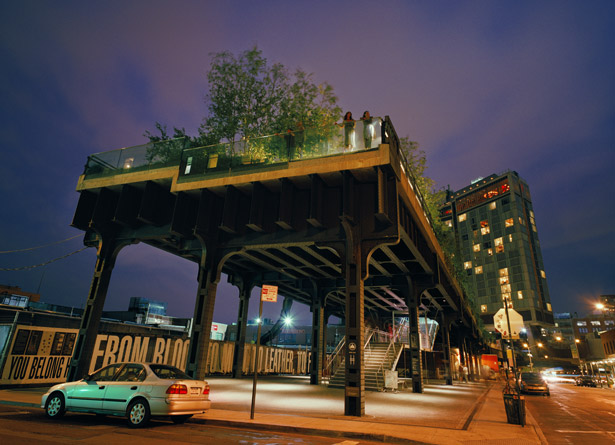
Parks in large cities are usually thought of as refuges, as islands of green amid seas of concrete and steel. When you approach the High Line in the Chelsea neighborhood on the lower west side of Manhattan, what you see first is the kind of thing urban parks were created to get away from—a harsh, heavy, black steel structure supporting an elevated rail line that once brought freight cars right into factories and warehouses and that looks, at least from a distance, more like an abandoned relic than an urban oasis.

Until recently the High Line was, in fact, an urban relic, and a crumbling one at that. Many of its neighbors, as well as New York’s mayor for much of the 1990s, Rudolph Giuliani, couldn’t wait to tear it down. His administration, aware that Chelsea was gentrifying into a neighborhood of galleries, restaurants, and loft living, felt the surviving portion of the High Line, which winds its way roughly a mile and a half from Gansevoort Street to 34th Street (a section farther south was torn down years ago), was an ugly deadweight. They were certain this remnant of a different kind of city had to be removed for the neighborhood to realize its full potential.

Never have public officials been so wrong. Almost a decade after the Giuliani administration tried to tear the High Line down, it has been turned into one of the most innovative and inviting public spaces in New York City and perhaps the entire country. The black steel columns that once supported abandoned train tracks now hold up an elevated park—part promenade, part town square, part botanical garden. The southern third, which begins at Gansevoort Street and extends to West 20th Street, crossing Tenth Avenue along the way, opened in the summer of 2009. This spring a second section will open, extending the park ten more blocks, roughly a half mile, to 30th Street. Eventually, supporters hope, the park will cover the rest of the High Line.

Walking on the High Line is unlike any other experience in New York. You float about 25 feet above the ground, at once connected to street life and far away from it. You can sit surrounded by carefully tended plantings and take in the sun and the Hudson River views, or you can walk the line as it slices between old buildings and past striking new ones. I have walked the High Line dozens of times, and its vantage point, different from that of any street, sidewalk, or park, never ceases to surprise and delight. Not the least of the remarkable things about the High Line is the way, without streets to cross or traffic lights to wait for, ten blocks pass as quickly as two.

New York is a city in which good things rarely happen easily and where good designs are often compromised, if they are built at all. The High Line is a happy exception, that rare New York situation in which a wonderful idea was not only realized but turned out better than anyone had imagined. It isn’t often in any city, let alone New York, that an unusually sophisticated concept for a public place makes its way through the design process, the political process, and the construction process largely intact. The designers were landscape architect James Corner of Field Operations and the architecture firm of Diller Scofidio + Renfro, who joined forces to produce the winning scheme in a competition that pitted them against such notables as Zaha Hadid, Steven Holl, and landscape architect Michael Van Valkenburgh.

Their plan struck a balance between refinement and the rough-hewn, industrial quality of the High Line. “We envisioned it as one long, meandering ribbon but with special episodes,” Corner told me. “We wanted to keep the feeling of the High Line consistent but at the same time have some variations.” The design included sleek wooden benches that appear to peel up from the park surface, but also kept many of the original train tracks, setting them into portions of the pavement and landscape. Working with Dutch landscape architect Piet Oudolf, Corner recommended a wide range of plantings, with heavy leanings toward tall grasses and reeds that recalled the wildflowers and weeds that had sprung up during the High Line’s long abandonment. (The line, which opened in 1934, was little used after the 1960s, although its final train, carrying frozen turkeys, didn’t travel down the track until 1980.)

Early in the two and a half decades that the High Line was unused and untouched, an obsessive rail buff named Peter Obletz purchased the elevated structure for ten dollars from Conrail with the intention of restoring it to rail use. Obletz’s ownership was held up in a five-year legal battle, which he lost. He died in 1996 but is, in a sense, a spiritual parent of the High Line preservation effort. So is photographer Joel Sternfeld. During the derelict years he made striking images of the High Line as a ribbon of green snaking through an industrial cityscape. Widely reproduced, his photographs played a significant role in building a constituency for saving the line for public use. Sternfeld showed that this clunky industrial object really could look like a park.

But the real heroes of the story are two men who met for the first time at a community meeting on the future of the line in 1999. Joshua David was then 36, a freelance writer who lived on West 21st Street, not far from the midsection of the High Line. Robert Hammond, an artist who worked for start-up tech companies to earn a living, was 29 and lived in Greenwich Village a few blocks from the southern terminus.

“I saw an article in the New York Times saying that the High Line was going to be demolished, and I wondered if anyone was going to try to save it,” Hammond said to me. “I was in love with the steel structure, the rivets, the ruin. I assumed that some civic group was going to try and preserve it, and I saw that it was on the agenda for a community board meeting. I went to see what was going on, and Josh was sitting next to me. We were the only people at the meeting who were interested in saving it.”

“The railroad sent representatives who showed some plans to reuse it, which enraged the people who were trying to get it torn down,” David explained. “That’s what sparked the conversation between me and Robert—we couldn’t believe the degree of rage some of those people had.”

David and Hammond asked railroad officials to take them to look at the High Line. “There’s a legend that we snuck in, but it’s not true,” Hammond said. “When we got up there, we saw a mile and a half of wildflowers in the middle of Manhattan.”

“New Yorkers always dream of finding open space—it’s a fantasy when you live in a studio apartment,” David said.

Amazed by the expansiveness of the space, the two men were determined to keep the High Line from being torn down. In the fall of 1999 they formed Friends of the High Line. At first their ambitions were modest. “We just wanted to fight Giuliani to keep it from being demolished,” Hammond said. “But preservation was only the first step, and we began to realize that we could create a new public place.”

The organization crept forward slowly. Then came the attack on the World Trade Center in 2001. “We thought no one would care about the High Line at that point,” Hammond said, “but the increased interest in urban planning and design with the ground zero design process paved the way for heightened interest in our project. People felt this was one positive thing they could do.” In 2002 Friends of the High Line commissioned an economic feasibility study, which concluded that, contrary to the Giuliani administration’s claim, turning the High Line into a park would help the neighborhood, not slow its development. Not long before, an abandoned rail line in eastern Paris, near the Place de la Bastille, had been turned into a highly successful linear park called the Promenade Plantée, which gave the group’s idea for the High Line a serious precedent. Although Parisian models don’t transfer easily into New York, the existence of the Promenade Plantée did a lot to increase the credibility of David and Hammond’s crusade. They began to think their idea of turning the High Line into a new kind of public place might be achievable.

Friends of the High Line may have been a grassroots group, but its roots were planted firmly in the world’s most sophisticated art and design community. In 2003 the pair decided to hold an “ideas competition”—not a formal architectural contest but an invitation to anyone to submit an idea and a design for what the High Line might become. They expected a few dozen proposals from New Yorkers. Their call brought 720 entries from 36 countries.

As New York recovered further from the trauma of September 11, Friends of the High Line continued to grow. It began to attract the attention of younger hedge fund managers and real estate executives with a philanthropic bent, people not established enough to join the boards of the city’s major cultural institutions but eager to make a mark. The High Line was tailor-made for them; its annual summer benefit became one of New York’s favorite causes and one of the few with a critical mass of supporters under age 40.

It didn’t hurt that Michael Bloomberg, who succeeded Giuliani, had a sympathetic view of saving the High Line. Bloomberg, a billionaire who had long been a major donor to the city’s cultural institutions, offered support for the High Line plan. The city struck a deal with Friends of the High Line, working with the group to design and construct what would become a new park and offering $112.2 million toward the projected $153-million cost of the first two phases, with another $21.4 million from federal and state funds. Friends of the High Line agreed to come up with $19.4 million and pay the majority of operating costs once the park was open.

In 2005 City Planning Commissioner Amanda Burden crafted zoning provisions for the area, setting rules for new construction that was cropping up. By the time the zoning was in place, the surrounding area had become one of the city’s hottest neighborhoods. Buildings by celebrated architects were in the works, including the IAC headquarters designed by Frank Gehry. In spring of 2006 the first piece of rail track was lifted off the High Line, the equivalent of a groundbreaking ceremony, and construction began.

From the day the first section of the High Line opened in June 2009, it has been one of the city’s major tourist attractions, and you are as likely to hear visitors speaking German or Japanese as English. Yet it is just as much a neighborhood park. When I joined Hammond for a walk along the High Line on a sunny day last fall, a section the designers had designated as a kind of sundeck was jammed, and there seemed to be as many locals treating the area as the equivalent of their own beach as visitors out for a promenade.

The sundeck area is one of the places James Corner likes to refer to as “episodes” along the High Line. There are more in the first section, because the route bends and turns, slips under three different buildings to become briefly tunnel-like, then opens up to offer vistas of the midtown skyline or the Hudson River. At the point at which the High Line crosses Tenth Avenue, it morphs once again, this time into an amphitheater-like space suspended over the avenue, allowing you to sit and watch the traffic glide beneath you.

The route of the elevated line straightens out in the second section, north of 20th Street, presenting the designers with a different kind of challenge. “It’s all wide open with views of the city, and then all of a sudden you’re walking between two building walls,” Corner said. “It’s dead straight, and we had to make it so you didn’t feel you were in a corridor.” He decided to start off the second section with a dense thicket of plantings, much heavier than anything in the first section, on the theory that if he couldn’t make the tightness go away, he should accentuate its drama for a block or so, then quickly downshift to a relaxed, open lawn. After that comes what the designers call the flyover: a metal structure that lifts the walkway up and allows a dense landscape of plantings to grow beneath. North of that is another seating area, this one looking down onto the street through an enormous white frame that alludes to the billboards that once adorned the neighboring buildings. Just beyond, a long stretch of promenade is lined with wildflowers.

On the day I toured the new section with Robert Hammond, much of the planting was already in place. Even though construction was still going on, it was strangely quiet. We walked the length of the new section; Hammond said the quiet reminded him of the way the High Line was at the very beginning, before the crowds started to pour in. “I thought I would miss the way it was,” he said. But the High Line’s overwhelming success, he has realized, has given him a satisfaction far beyond the pleasures of seeing the old steel structure empty.

← Older posts
Newer posts →

Enter your email address to subscribe to this blog and receive notifications of new posts by email.

Join 218 other subscribers

Follow us on twitter

Tweets by Y2DC

Become our Friend on Facebook

Become our Friend on Facebook

Recent Posts

  • MNKY HSE | MNKY LNGE
  • The Golden Ratio: Design’s Biggest Myth
  • Twice old and once new: Holiday apartment in Switzerland
  • Dering Hall
  • hedge_9_folio_067

Blog at WordPress.com.

  • Subscribe Subscribed
    • Y2DC©
    • Join 218 other subscribers
    • Already have a WordPress.com account? Log in now.
    • Y2DC©
    • Subscribe Subscribed
    • Sign up
    • Log in
    • Report this content
    • View site in Reader
    • Manage subscriptions
    • Collapse this bar
 

Loading Comments...